
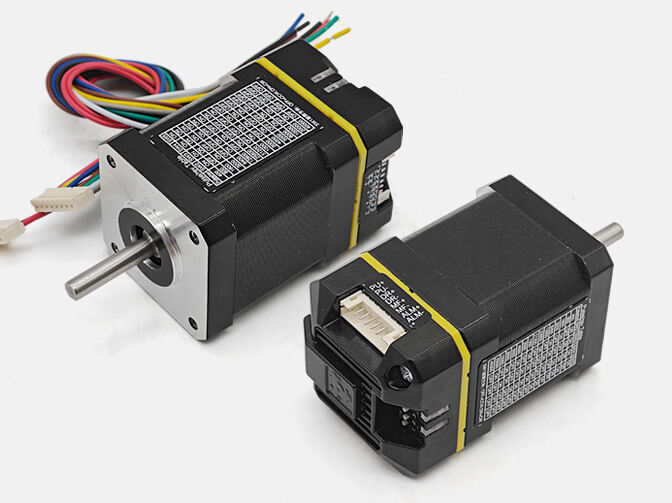
In the world of motion control systems, servo motors are an essential component for achieving precise, efficient, and reliable movement in machines and devices. Among the various Closed Loop Steppers Motors & Drivers, hybrid servo motors have gained significant popularity due to their unique ability to offer a blend of high performance and energy efficiency. As industries across manufacturing, robotics, and automation continue to demand more precise control and better energy savings, understanding the role and advantages of hybrid servo motors is crucial for optimizing system performance.
What Are Hybrid Servo Motors?
Hybrid servo motors combine the features of both permanent magnet synchronous motors (PMSMs) and traditional stepper motors, resulting in a system that delivers the best of both worlds. They are called "hybrid" because they integrate the best features of two distinct motor technologies, offering enhanced torque, speed control, and precision while maintaining energy efficiency.
Typically, hybrid servo motors feature a permanent magnet rotor, which interacts with the stator windings to generate controlled motion. This integration of technologies helps achieve superior performance in applications that demand high precision but also require the energy-saving benefits that come with efficient power consumption.
Key Features of Hybrid Servo Motors
-
High Precision and Speed Control
One of the standout characteristics of hybrid servo motors is their ability to provide extremely precise control over motion. With the help of an encoder or resolver feedback system, these Brushless DC Motors & Drivers can achieve smooth and accurate positioning, which is crucial in applications such as robotics, CNC machines, and automated assembly lines. Additionally, they offer excellent speed control, ensuring that machines operate with minimal fluctuations in speed, which is essential for high-performance tasks. -
Efficient Energy Use
Hybrid servo motors are highly energy-efficient compared to traditional induction motors or stepper motors. By leveraging permanent magnets in their design, these motors minimize energy losses, leading to lower heat generation and reduced power consumption. This makes them an ideal choice for applications where efficiency is a top priority, such as electric vehicles, industrial automation, and HVAC systems. -
Torque and Load Handling
These motors provide a high torque-to-size ratio, meaning they can handle larger loads without taking up excessive space or requiring more power. They are particularly beneficial for applications that require continuous, high-torque output, such as conveyor systems and injection molding machines. The combination of both high torque and compact size helps optimize space and performance in machines. -
Reduced Maintenance Needs
Hybrid servo motors also stand out for their reliability and longevity. Since they do not rely on brushes like some other motors, they experience less wear and tear over time, reducing the frequency of maintenance and lowering operational costs. This makes them ideal for use in high-demand environments where uptime and reliability are critical.
Benefits of Hybrid Servo Motors
-
Cost-Effectiveness: While hybrid servo motors may have a higher upfront cost compared to simpler motor types, their energy efficiency and reduced maintenance costs can result in significant savings over time.
-
Better Control and Performance: Hybrid servo motors offer enhanced control over speed, torque, and position, making them ideal for tasks that require a combination of precision and power.
-
Reduced Energy Consumption: Thanks to their permanent magnet design, these motors use less energy than traditional motors, making them more cost-effective and environmentally friendly in the long run.
-
Smaller Footprint: The compact design of hybrid servo motors allows them to be used in space-constrained environments, which is particularly useful in modern manufacturing, robotics, and automation systems.
Applications of Hybrid Servo Motors
Stepper Motor & Drivers s are used in a wide range of industries, including:
-
Manufacturing and CNC Machines: Their precise control over movement makes them perfect for applications requiring fine-tuned machinery.
-
Robotics: Hybrid servo motors allow for accurate, energy-efficient movements that are essential in robotics applications, especially in collaborative robots (cobots) and assembly line automation.
-
Automated Material Handling: These motors are ideal for conveyor belts, packaging machinery, and other automated material handling systems, where efficiency and reliability are key.
-
Electric Vehicles (EVs): In electric vehicles, hybrid servo motors are used in the powertrain systems for their high efficiency and compact size, contributing to longer battery life and reduced energy consumption.
Conclusion
Hybrid servo motors strike the perfect balance between performance and efficiency, combining the best attributes of permanent magnet synchronous motors and stepper motors. With their precise control, energy-saving benefits, and high torque capacity, they offer a powerful solution for industries that require high-performance motion control systems. Whether in robotics, manufacturing, or automotive applications, hybrid servo motors are rapidly becoming a go-to choice for engineers and system designers seeking to optimize both functionality and energy use in their operations. As technological advancements continue, the role of Integrated Stepper Servo Motors in creating more efficient, high-performance systems will only expand.